
What if you could carry your own climate with you on a bike ride, at work, or even while you sleep? This startup is building wearable cooling tech that ditches traditional AC and puts comfort under your control. Curious how it works and why global demand is already heating up?
In a country battling rising heatwaves and soaring energy bills, a Delhi-based deep-tech startup is rethinking cooling from the ground up. Instead of relying on traditional air conditioners, the company is developing portable, wearable systems powered by advanced thermoelectric technology that directly regulate body temperature, delivering personalised comfort while reducing energy use. This shift could redefine thermal comfort not just in India, but globally. What if staying cool didn’t mean chilling entire rooms, but precisely regulating your own body temperature anytime, anywhere?
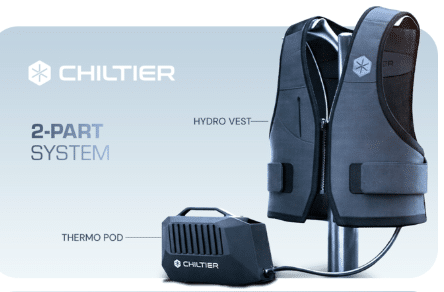
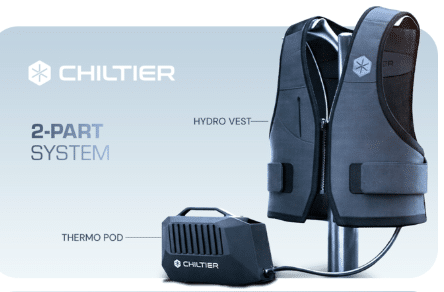
Air conditioning, while effective, is highly inefficient at cooling empty spaces rather than people. This leads to massive electricity consumption and environmental strain. The startup’s founder, drawing from firsthand experience in high-heat industrial environments and outdoor sports, identified a gap: there is no effective active cooling solution for individuals in motion or outdoor settings. Kulpreet Sahni, founder, explained that “at the heart of the solution is a ‘Thermopod’ system, a compact device that circulates temperature-controlled water through highly conductive tubing embedded in jackets, mattresses, and other products”.

Unlike passive cooling fabrics, this system uses solid-state thermoelectric (Peltier) technology to actively extract heat from the human body. The innovation lies in:
- Custom high-conductivity tubing for efficient heat transfer
- Proprietary heat dissipation system solving Peltier inefficiency
- Dual-mode (hot & cold) control, even allowing two users to set different temperatures on the same mattress
The result: up to 15% reduction in energy use by minimising dependence on air conditioning. The biggest hurdle was overcoming the low efficiency of Peltier systems. The team tackled this by creating a controlled microclimate inside the device and separating heat zones to prevent thermal mixing, an early prototype failure that forced a complete redesign.
The team has engineered a highly sophisticated system that combines leak-proof, hypoallergenic fluid mechanisms with smart power throttling to optimise energy consumption. Safety has also been a priority, with features like magnetic disconnects ensuring ease of use in wearable formats. What they are building goes beyond a single product; it introduces an entirely new category of “personal thermal architecture.” The applications are wide-ranging, from outdoor workers and athletes to patients with temperature regulation disorders, as well as hospitals, long-duration surgeries, and even military operations in extreme climates.
As part of its global strategy, the startup is launching on Kickstarter, where nearly 90% of early demand is already coming from the US. Pre-launch traction is strong, with around 7,000 high-intent customers and expectations of generating between $0.5 million and $1 million in revenue on the very first day. To remain asset-light, manufacturing has been outsourced to an NCR-based electronics major, avoiding heavy upfront capital investment.
Looking ahead, the company plans to raise a pre-Series A round once revenue is validated, while expanding B2B partnerships across hospitals, hotels, and the defence sector. There are also plans to integrate the system with wearable health devices, enabling adaptive and personalised cooling experiences. Ultimately, the bigger bet lies not just in cooling technology but in advancements in battery innovation. As battery density improves, these systems are expected to become lighter, more efficient, and more accessible. If successful, this approach could signal a shift toward a post-air-conditioning world where comfort is personal, portable, and significantly more energy-efficient.